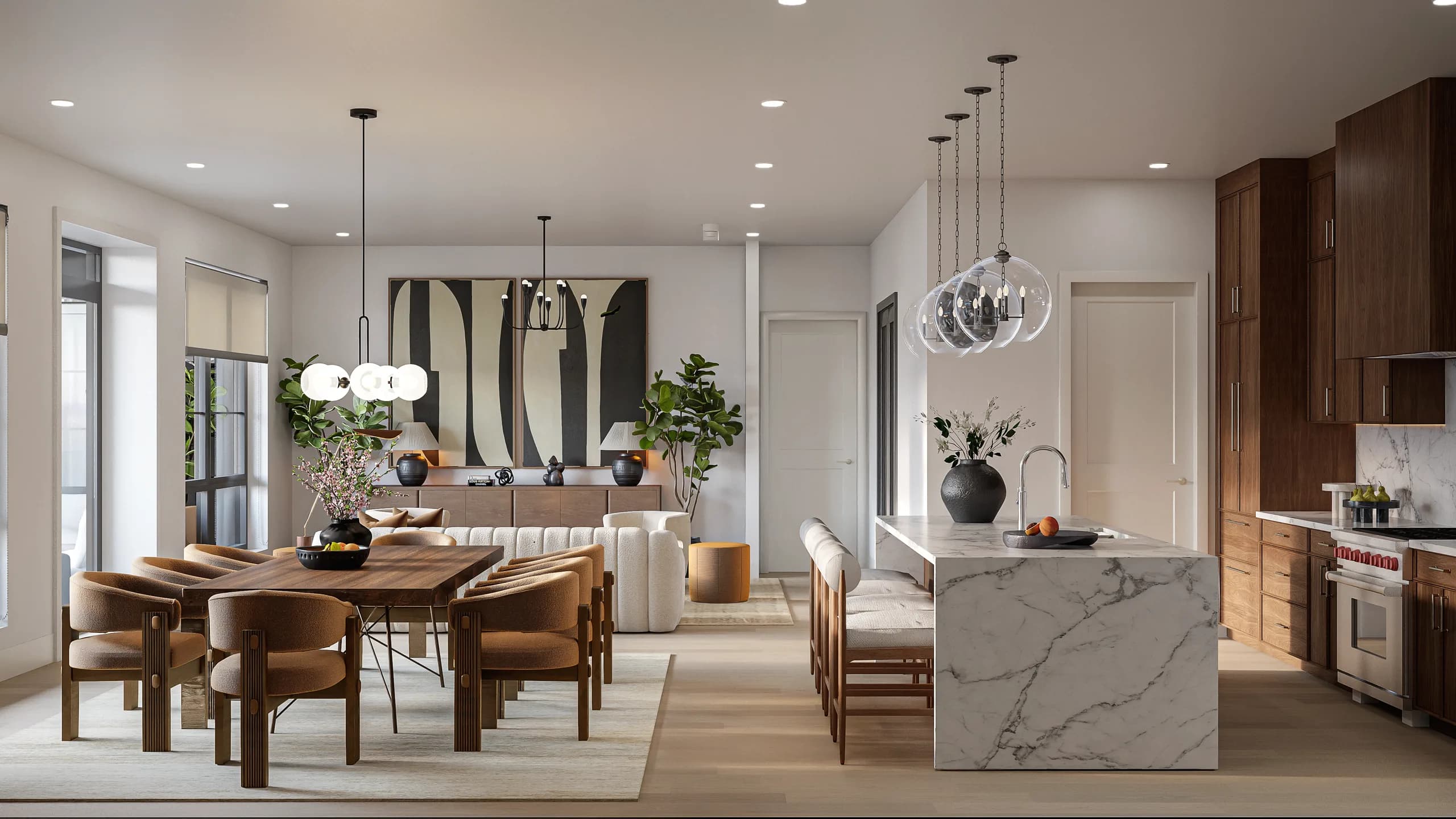
Buying or building a luxury home should be one of life's great moments. Too often, it isn't. Buyers commit millions against renderings, wait two years for keys, and then face six more months of furnishing decisions before the home feels finished. The dream they were sold — a beautifully imagined home, ready to receive them — arrives a year late and three contractors short.
The category has a name for the alternative. Turnkey luxury furnishing. It's not new, and it's not glamorous, and the small firms who've been doing it well have been doing it well for decades. What's new is that the gap between “sold” and “lived in” has grown wider at the same moment the buyer's tolerance for that gap has narrowed.
What turnkey actually means.
A turnkey program is the end-to-end design, procurement, and installation of a home's interior — delivered ready to move into. It covers design, visualization, furnishings selection, ordering, logistics, and white-glove install, eliminating the months of coordination buyers typically face after closing.
Each of those steps exists in the traditional flow. What's different is that one accountable partner carries them through, in one continuous program, with one buyer relationship and one quality bar.
Why move-in day matters more than the listing did.
Most luxury new-construction marketing treats closing day as the finish line. It's the opposite. Closing day is the moment the home's reputation gets made. What the buyer is left with — what they actually live in — is the only thing that gets discussed at every dinner party for the next five years.
The deal closes on closing day. The marketing starts the day after.
When move-in day is a joyful moment — a complete, beautifully installed home, ready for life — it becomes the buyer's reference point for every subsequent recommendation.
Who turnkey is for.
Turnkey isn't for everyone. Buyers who want to project-manage the design of their own home over twelve months should do that. Turnkey is for buyers moving into a new build, buyers beginning a new chapter, buyers finishing a second home, and buyers giving a finished property a second act.
Why it's harder than it looks.
Turnkey doesn't fail at the visible end. It fails at the seams. The handoff from designer to procurement. From procurement to install. Each of those seams is where most programs lose their luxury and become logistics. Doing it well is a question of operating discipline, not taste alone.
What the next decade of turnkey looks like.
Three things become standard: visualization as the default sales artifact, branded Signature Collections per development, and install as a moment — not a project. 2–5 days, then the buyer's keys turn to a complete home.
Move-in day should feel like the home you imagined. All you should bring are your keys. That's the case for turnkey.