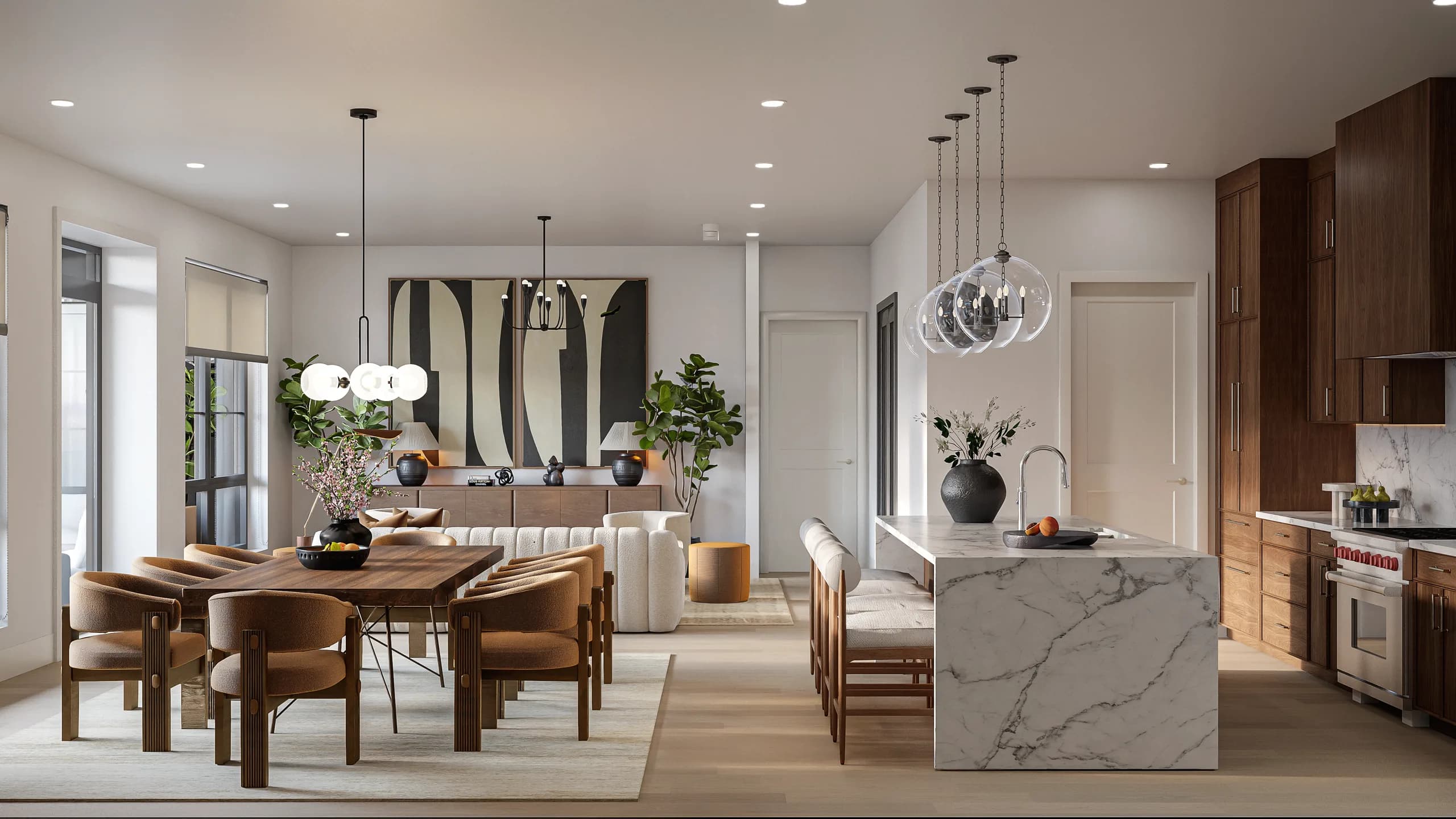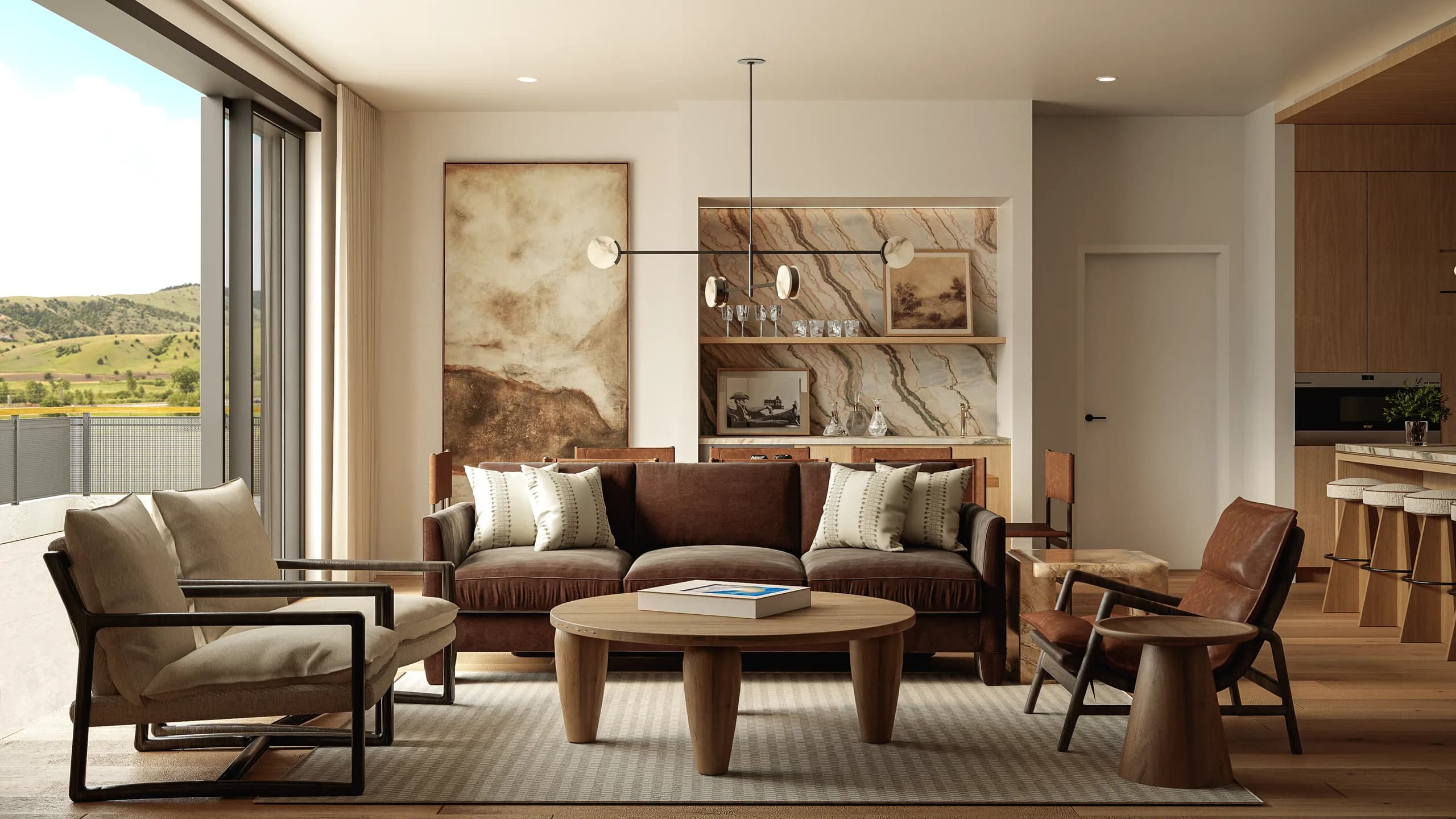
A Signature Collection is a branded, fully-visualized interior design program built by Reverie3D for one development — and only that development. Each Collection captures the soul of the place — its architecture, its setting, the life it offers — and translates it into design language tailored for every floorplan in the building. Buyers don't just see a finished home. They see a finished home that could only belong to this development.
That is the differentiator. It's also the most-asked-about thing on the builder side of our work, so it deserves a clear explanation. What a Signature Collection actually is, how one gets built, why it sells, and what it costs to operate.
What a Collection is, and isn't.
A Signature Collection is not a catalog. It is not a furniture line. It is not a license between a developer and a furniture brand. It is a design program — an interior vocabulary — expressed across every floorplan and every public space in a development, owned by the development for the life of the campaign.
A Collection has a name. The Vantage. The Crown. The Owners' Club. Church Street. Names that come from the building's story, not from a swatch book. A Collection has materials — the wood the dining tables are turned from, the metal the lighting is finished in, the family of textiles the upholstery comes from. A Collection has a point of view: the buyer who'd choose this development is someone who values precision, or warmth, or restraint, or vertical drama — and the Collection makes that visible in the rooms they'll live in.
How a Collection gets built.
Each Collection runs through the same five-stage program:
Stage 01 — Discovery.
We learn the development. The architect's intent. The site. The buyer profile. The price band. The pace of the sales campaign. The developer's reputation in the market. The neighbors. The view. The story the building is telling.
Stage 02 — Design language.
Our design team builds the Collection's vocabulary: palette, materiality, lighting language, art posture, accessory rhythm. We're not picking sofas yet. We're defining the rules under which the sofas, art, lighting, and finishes will be picked, across every floorplan.
Stage 03 — Per-floorplan adaptation.
The Collection language is adapted to each unit type in the development. A studio reads differently from a half-floor penthouse, but both speak the Collection's vocabulary. We render each floorplan, photorealistically, in the Collection's language, within 1–3 weeks of project start.
Stage 04 — Sales-ready assets.
The renderings become sales-gallery content, brochure spreads, listing imagery, brokerage assets, social campaigns, and 360° views for the developer's marketing. Usable for the life of the campaign — not licensed images that expire when an external partner's contract does.
Stage 05 — Install-ready specification.
Every piece in the Collection — furniture, lighting, art, accessories, finishes — is specified, sourced, and pre-positioned in our supply network. When the buyer signs, the path from contract to post-closing install runs along rails we've already laid.
Why Collections sell.
The deal closes when the buyer can see the home they're committing to. Not a generic model unit. Not a render of someone else's apartment. Their unit, with the actual view, in finishes they'll get, with the Collection's identity they fell in love with on the brochure.
A Signature Collection turns “an apartment with a view” into “the only place this home could be.”
For the developer, that translates to three measurable things: faster absorption (buyers commit on shorter timelines because uncertainty is lower), stronger marketing assets (the entire campaign benefits from real, branded photography and renderings), and referral lift (a buyer who got the move-in moment they were promised becomes the most credible source of the next sale).
Who Collections are for.
Signature Collections fit two builder/developer profiles cleanly. Vertical developers — condos, towers, multi-family — where the same Collection language runs across many units and the marketing campaign needs branded coherence. Custom & spec builders — where a Signature Collection across the model home(s) gives the buyer a tangible expression of the builder's identity, and a starting point for per-buyer customization.
They don't fit every project. A one-off luxury home with a single buyer who has very specific tastes is usually better served by a fully bespoke Reverie3D engagement — same team, same process, no shared Collection language. We'll tell you which fits during the first conversation.
What changes with a Collection in place.
For a developer or builder, the operational shifts are concrete:
- The sales gallery shows the actual building's actual interior vocabulary, not a generic model.
- Every floorplan has photorealistic renderings, ready before the buyer asks.
- The buyer-experience window between contract and closing is run by Reverie3D, not by your sales team chasing furniture lead times.
- Every unit is installed turnkey in 2–5 days post-closing — not a rolling stress over months.
- Co-branded marketing assets are usable across listings, brochures, brokerage materials, and digital campaigns for the life of the development.
A Signature Collection is a branded, fully-visualized interior design program built by Reverie3D for a specific development or community. Each Collection captures the soul of the place — its architecture, its setting, and the life it offers — and translates that identity into design language tailored for every floorplan. Buyers see a finished home that could only belong to your development, and walk into it installed on move-in day.
How to think about whether a Collection fits your project.
Three questions usually clarify the fit:
- Does the development have a story? Sites and architecture vary in how distinctive they are. A Collection works best where there's identity to translate — a view, a neighborhood, a moment in a city's arc.
- Is the campaign long enough? Collections amortize over time. A development with a multi-year sales arc gets more from a Collection than one with a 90-day pre-sale window.
- Is the buyer paying for the building's identity, or for the unit alone? When the answer is "the building's identity," a Collection is the asset that makes that identity tangible.
If the answers are yes — we'd love to talk. Open a partnership conversation on our contact page.